

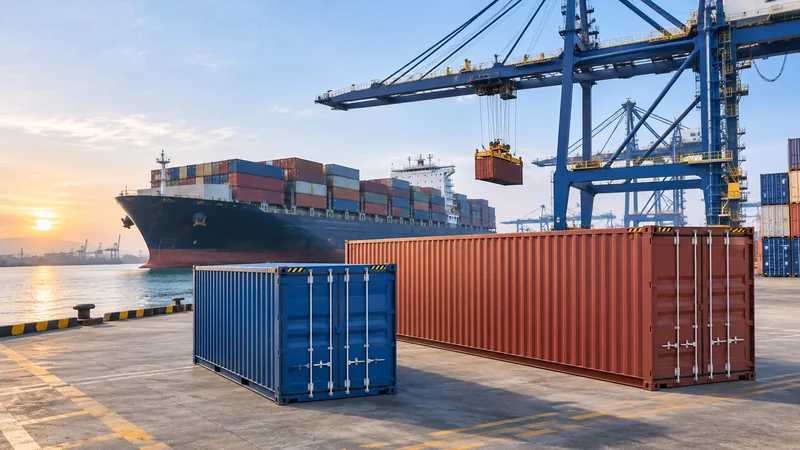
The sea freight cost from China to the USA depends on container size, shipping route, cargo requirements, departure date, and the services included in the quotation. A 40ft container provides substantially more cargo space than a 20ft container, but it does not necessarily cost twice as much to ship.
For U.S. businesses importing commercial goods from China, the ocean freight rate is only one part of the transportation budget. Origin handling, destination terminal charges, customs-related expenses, and inland delivery can significantly affect the final cost.
This guide explains how 20ft, 40ft, and 40HC container shipping costs are structured, how to compare freight quotations, and how to choose an economical option for your cargo.
How Much Does It Cost to Ship a 20ft or 40ft Container from China to the USA?
There is no single fixed price for shipping a container from China to the United States. A reliable estimate requires a specific origin, destination, container type, shipping period, and quotation scope.
For example, a 20ft container shipped from Shanghai to Los Angeles will have a different cost structure from a 40ft container shipped from Ningbo to New York. Even quotations for identical routes may differ because of carrier availability, market conditions, and included services.
How Are 20GP, 40GP, and 40HC Ocean Freight Rates Quoted?
Full Container Load (FCL) shipping rates are generally quoted per container rather than per cubic meter.
The three common dry-container options are:
- 20GP: A standard 20ft general-purpose container.
- 40GP: A standard 40ft general-purpose container.
- 40HC: A 40ft high-cube container offering additional internal height.
Each container type can have a different ocean freight rate. A 40HC container may be priced similarly to a 40GP on some services, but this should never be assumed without checking equipment availability and the carrier’s quotation.
Importers should also distinguish three different pricing scopes.
| Pricing Scope | What It Generally Covers | What Requires Confirmation |
|---|---|---|
| Base ocean freight | Main international ocean carriage | Carrier surcharges and included services |
| Port-to-port quotation | Transportation between specified port points | Origin handling, destination handling, and local fees |
| Delivered shipping quotation | Agreed transportation through the named destination | Customs services, duties, unloading, and accessorial charges |
These descriptions are commercial shorthand, not standardized lists of included charges. The written quotation determines the actual scope.
Why Do China–USA Container Shipping Prices Vary?
Several factors determine the final quotation.
Origin port: Shanghai, Ningbo, Shenzhen, Qingdao, and other Chinese ports have different service patterns and local transportation requirements.
U.S. destination: Los Angeles, Long Beach, New York/New Jersey, Savannah, and Houston have different routing and inland distribution considerations.
Container equipment: Pricing and availability vary among 20GP, 40GP, and 40HC containers.
Shipping date: Carrier capacity, seasonal demand, equipment availability, and applicable surcharges can change between quotation periods.
Delivery requirements: A container delivered to a port terminal costs differently from one transported to an inland warehouse.
What Should You Check Before Comparing Freight Rates?
A meaningful comparison should identify the same origin, destination, equipment type, departure window, and service scope.
Check whether each quotation specifies:
- Base ocean freight and included surcharges.
- Container type and equipment availability.
- Origin and destination handling arrangements.
- Quotation currency and validity period.
- Estimated sailing or booking window.
- Included and excluded services.
Published freight indexes may help explain broader market conditions. However, a rate index based on 40ft equipment is not automatically a valid quotation for a 20GP or 40HC shipment.
For an accurate shipping budget, compare actual quotations for the same shipment rather than relying on a general online price range.
Which Is More Cost-Effective: a 20ft, 40ft, or 40HC Container?
The most economical container is not always the one with the lowest ocean freight rate. It is the container that can safely accommodate the cargo while providing the most suitable total transportation cost.
Comparing Container Capacity, Payload, and Loading Limitations
Standard containers differ significantly in internal space but not necessarily in maximum permitted cargo weight.
| Specification | 20GP | 40GP | 40HC |
|---|---|---|---|
| Approx. internal length | 5.90 m | 12.03 m | 12.03 m |
| Approx. internal width | 2.35 m | 2.35 m | 2.35 m |
| Approx. internal height | 2.39 m | 2.39 m | 2.70 m |
| Nominal cubic capacity | 33.2 m³ | 67.7 m³ | 76.4 m³ |
| Example carrier maximum payload | 28,300 kg | 28,870 kg | 28,690 kg |
| Common consideration | Dense or smaller cargo loads | Higher-volume cargo | Bulky or taller cargo |
Sources: Maersk cargo weight and capacity specifications and DSV dry-container dimensions. Dimensions and payload values are equipment references, not guaranteed limits for every container.
Actual usable loading space depends on packaging, pallets, stacking restrictions, door openings, and weight distribution.
A container’s published maximum payload also does not establish the weight permitted for every U.S. trucking movement. Chassis configuration, axle limits, road regulations, and the delivery route must be checked separately.
When Is a 20ft Container the Better Option?
A 20GP container can be suitable for smaller commercial orders or relatively dense cargo.
Examples include machinery components, metal products, industrial equipment parts, and other goods where shipment weight becomes restrictive before the container’s volume is fully used.
A 20ft container may be the more economical choice when:
- The entire shipment fits safely within its dimensions and payload limits.
- The cargo does not require the additional space of a 40ft container.
- Total transportation and inland delivery costs are lower.
- The buyer does not benefit from ordering additional inventory.
However, heavy cargo still requires a loading and inland transport assessment. Selecting a 20GP container does not automatically eliminate overweight trucking charges.
When Should Importers Choose a 40ft or 40HC Container?
A 40GP container is often worth considering for larger shipments of furniture, packaged retail inventory, building products, or other relatively lightweight commercial goods.
A 40HC offers additional vertical space and can be useful for taller packages or bulky products with compatible loading configurations.
The larger equipment may reduce transportation cost per unit when the importer can utilize the extra space effectively.
However, greater capacity does not automatically justify a larger shipment. Additional purchasing costs, warehouse storage, and inventory carrying expenses also matter.
How Should Importers Compare Container Cost Efficiency?
Use four checks before selecting equipment:
- Physical fit: Confirm cargo dimensions, packaging, stacking, and loading requirements.
- Weight feasibility: Verify equipment payload, axle restrictions, and inland delivery limits.
- Total cost: Compare equivalent origin, ocean, destination, and inland transportation charges.
- Cost efficiency: Calculate logistics cost per loaded cubic meter or per saleable unit.
For a fixed quantity that fits both a 20GP and 40GP, compare the total cost of transporting that same quantity.
If the buyer is considering increasing the order to fill a 40GP, unit transportation costs become useful—but they must be evaluated alongside inventory requirements.
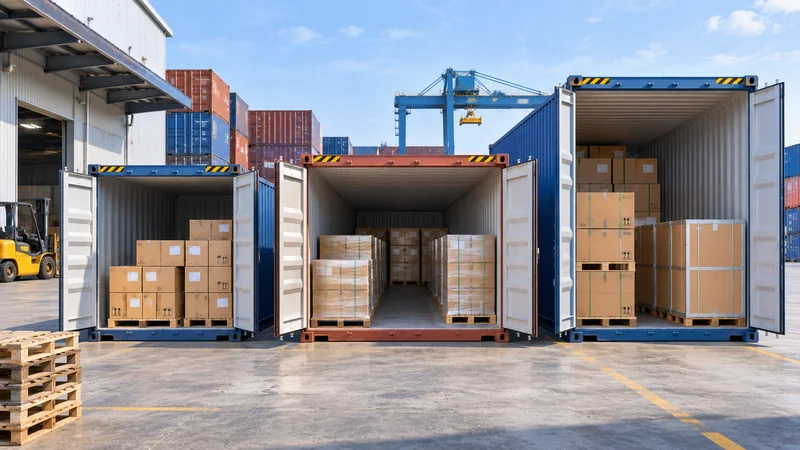
What Charges Make Up the Total China–USA Container Shipping Cost?
A complete FCL budget should identify charges at origin, during ocean transportation, at the U.S. destination, and throughout inland delivery.
Not every charge applies to every shipment, and some expenses may already be included in the supplier’s selling price or the freight quotation.
Origin Charges in China
Depending on the agreed commercial terms and service scope, origin expenses may include:
- Empty-container pickup and positioning.
- Trucking from the factory to the Chinese port.
- Container loading and securing.
- Export customs documentation and coordination.
- Origin terminal handling charges.
- Bill of lading and documentation services.
- Verified Gross Mass (VGM) administration, where separately charged.
- Warehousing or consolidation of cargo from multiple suppliers.
For example, under an appropriately agreed FOB arrangement, certain origin responsibilities belong to the seller. The buyer should check which charges are already covered rather than automatically adding them again.
Ocean Freight and Carrier-Related Charges
The main ocean freight charge covers international carriage under the carrier’s quoted service.
Depending on the quotation, additional carrier charges may include fuel-related adjustments, peak-season surcharges, equipment-related fees, or other applicable charges.
Some are included in an all-in freight rate. Others may appear as separate line items.
A quotation should therefore specify whether the ocean freight amount includes all applicable carrier surcharges for the stated validity period.
U.S. Destination and Inland Delivery Charges
After arrival, the shipment may involve destination terminal handling, carrier release procedures, customs coordination, and inland transportation.
For an importer delivering a container to a U.S. warehouse, relevant expenses may include:
- Destination terminal handling.
- Carrier release or documentation fees.
- Port drayage.
- Chassis usage.
- Rail or intermodal transportation.
- Trucking to the final delivery address.
- Special delivery or unloading requirements.
Additional costs may arise from customs examinations, terminal delays, extended equipment use, or unsuccessful delivery appointments.
China–USA FCL Shipping Cost Breakdown
| Shipping Stage | Potential Charge | Typical Charging Basis | Cost Responsibility |
|---|---|---|---|
| China origin | Factory-to-port trucking | Per container or movement | Depends on Incoterm and contract |
| China origin | Loading and export handling | Per container or service | Confirm supplier and forwarder scope |
| China origin | Documentation and terminal handling | Per shipment or container | Check quotation inclusions |
| Ocean transport | Base freight and surcharges | Per container | Contract-dependent |
| U.S. destination | Terminal and carrier charges | Per container or shipment | Confirm destination tariff and scope |
| U.S. destination | Customs brokerage | Per entry or service | Depends on arrangement |
| Inland delivery | Drayage and chassis | Per movement, equipment period, or service | Confirm delivery scope |
| Inland delivery | Rail or long-distance trucking | Per container or movement | Confirm destination and routing |
| Conditional | Storage, detention, examinations | Event-, time-, or service-dependent | Confirm applicable rules and agreement |
The table identifies possible charge categories, not a universal list of mandatory fees.
Which Charges Are Already Included in Your Quote?
Before accepting a freight quotation, ask the provider to identify each significant expense as:
- Included: Covered by the stated quotation.
- Excluded: Payable separately.
- Conditional: Payable only if a specified event occurs.
- Already covered elsewhere: Included in the supplier’s contractual price or another service agreement.
This distinction prevents double-counting and exposes incomplete quotations.
For procurement teams, the most useful figure is the comparable total logistics cost for the agreed transportation scope, not merely the lowest advertised ocean freight charge.

How Do U.S. Shipping Routes and Delivery Terms Affect the Final Cost?
The U.S. arrival port and final delivery location can materially affect the total transportation budget.
A lower ocean freight rate does not always mean a cheaper shipment once inland distribution is included.
West Coast vs. East Coast vs. Gulf Coast Shipping Costs
Major U.S. gateways serve different geographic markets and distribution networks.
| U.S. Gateway | Representative Ports | Main Cost Considerations |
|---|---|---|
| West Coast | Los Angeles / Long Beach | Ocean service, terminal handling, drayage, rail connections |
| East Coast | New York / New Jersey, Savannah | Ocean routing, port charges, regional distribution |
| Gulf Coast | Houston | Available carrier services, terminal handling, inland trucking |
For example, an importer delivering goods to Chicago should compare complete transportation options, including inland rail or trucking, rather than selecting a coastal port solely because its ocean freight rate appears lower.
Port selection should account for the final delivery ZIP code, cargo characteristics, inland equipment, service availability, and delivery requirements.
Port-to-Port vs. Port-to-Door vs. Door-to-Door
These terms describe different transportation scopes.
Port-to-port generally focuses on transportation between agreed port points. Origin and destination local services may be outside the quoted price.
Port-to-door extends transportation from an agreed origin port to a named inland delivery address.
Door-to-door generally includes transportation from the agreed origin pickup location through the named destination.
However, neither port-to-door nor door-to-door automatically guarantees customs brokerage, duties, import taxes, unloading, or every accessorial charge.
Importers should request a written scope specifying each included service and responsibility.
For broader route and service planning, see Winsail’s shipping from China to the USA destination guide.
How Do FOB, CIF, DAP, and DDP Affect Cost Responsibility?
The agreed Incoterm influences which party arranges and pays for transportation and other shipment obligations.
| Incoterm | Main Cost Implication |
|---|---|
| FOB | Seller fulfills delivery obligations when the goods are on board the vessel at the named loading port; buyer generally arranges main carriage |
| CIF | Seller arranges carriage and specified insurance to the named destination port; import and subsequent delivery costs require separate consideration |
| DAP | Seller arranges delivery to the named destination, while import clearance and duties generally remain the buyer’s responsibility |
| DDP | Seller assumes import clearance and applicable duty obligations under the rule, subject to legal and operational feasibility |
For containerized shipments delivered to a terminal before vessel loading, FCA may be more suitable than FOB, depending on the commercial arrangement.
Incoterms allocate responsibilities, but they do not replace a detailed quotation or determine every customs compliance requirement.
Importers should specify the agreed Incoterms version and named place in the purchase contract. See the International Chamber of Commerce’s Incoterms 2020 guidance.
What U.S. Import Charges Are Separate from Ocean Freight?
Commercial importers should budget for applicable customs fees, duties, and clearance services separately from international ocean freight.
These expenses depend on the merchandise, import arrangements, entry circumstances, and applicable U.S. regulations.
Customs Brokerage, Customs Bonds, and Importer Responsibilities
A customs broker may prepare entry documentation, coordinate customs submissions, and assist with applicable clearance requirements.
Brokerage services are generally charged separately unless explicitly included in a larger service quotation.
A customs bond may also be required, depending on entry circumstances and applicable regulations. Importers should confirm whether a single-entry or continuous bond is appropriate.
The U.S. Importer of Record remains responsible for exercising reasonable care regarding customs declarations, classification, valuation, and applicable duties and fees, even when using a customs broker.
The U.S. Customs and Border Protection importer guidance explains these responsibilities.
Merchandise Processing Fee and Harbor Maintenance Fee
Two important U.S. import charges are the Merchandise Processing Fee (MPF) and Harbor Maintenance Fee (HMF).
Merchandise Processing Fee (MPF)
For applicable formal customs entries, MPF is calculated at 0.3464% of the relevant merchandise value, subject to a minimum and maximum.
For U.S. fiscal year 2027, effective October 1, 2026, the published formal-entry minimum is $34.58 and the maximum is $670.86.
These figures are time-sensitive and should be rechecked before relying on them for a future shipment.
Source: CBP Fiscal Year 2027 User Fee Notice.
Harbor Maintenance Fee (HMF)
HMF generally applies at 0.125% of applicable commercial cargo value for qualifying waterborne port use, subject to the relevant rules and exemptions.
Source: CBP Harbor Maintenance Fee Guidance.
Neither fee should be treated as a universal fixed amount charged separately for every container.
Import Duties, Additional Tariffs, and ISF Filing
U.S. import duties depend on the product’s Harmonized Tariff Schedule classification, customs value, origin, and applicable trade measures.
Certain China-origin products may face additional duties or other import restrictions. These requirements can change, and one tariff percentage cannot accurately represent every category of Chinese merchandise.
Importers should confirm the applicable classification and duty treatment using the current U.S. Harmonized Tariff Schedule and appropriate customs guidance.
For applicable U.S.-bound ocean shipments, an Importer Security Filing (ISF), commonly called ISF 10+2, is also required.
Most key ISF information generally must be submitted at least 24 hours before the cargo is loaded aboard the vessel bound for the United States. Specific timing rules apply to certain data elements.
The ISF importer is responsible for ensuring compliance, although an authorized agent may submit the filing.
Source: CBP Importer Security Filing Guidance.
ISF filing services, customs brokerage, bonds, government charges, and duties should be identified separately in the import budget unless the agreed quotation expressly includes the relevant amounts.
What Unexpected Charges Can Increase Container Shipping Costs?
Even a carefully prepared freight quotation cannot eliminate every possible additional expense.
Cargo holds, terminal delays, equipment restrictions, and delivery problems can create costs that were not part of the original transportation estimate.
Demurrage, Detention, and Terminal Storage
Demurrage generally relates to the use of carrier equipment beyond the applicable allowed period while a container remains at a terminal.
Detention generally relates to keeping carrier equipment beyond the permitted period outside the terminal.
Terminal storage may involve separate charges governed by terminal or contractual arrangements.
These concepts can overlap operationally, and their precise definitions and calculation methods depend on the applicable terms.
Importers should confirm:
- Available free time.
- When each charging period begins.
- Applicable daily rates and escalation.
- Who is responsible for monitoring container availability.
- Who arranges empty-container return.
U.S. billing requirements are also subject to Federal Maritime Commission rules. Following a 2025 court decision, one provision addressing eligible invoice recipients was set aside, while other portions of the billing regulations remained in effect.
Source: Federal Maritime Commission Billing Practices Update.
Customs Examinations, Chassis Charges, and Delivery Delays
Additional expenses may result from customs inspections, extended chassis use, overweight cargo, unsuccessful delivery appointments, or delayed unloading.
For example, a warehouse without suitable container-unloading facilities may require special equipment or additional handling arrangements.
A shipment placed on customs hold may also incur storage or handling costs while awaiting release.
These expenses are conditional, not guaranteed charges on every shipment.
How Can Importers Reduce Avoidable Charges?
| Potential Expense | Common Trigger | Preventive Action |
|---|---|---|
| Demurrage or terminal storage | Delayed release or container pickup | Prepare documents early and monitor availability |
| Detention | Late equipment return | Schedule unloading and empty return |
| Extended chassis charges | Longer equipment use | Confirm drayage and equipment arrangements |
| Delivery accessorials | Limited warehouse access or unloading delays | Verify receiving requirements |
| Overweight trucking charges | Cargo exceeds applicable transport limits | Confirm weights and route restrictions |
| Examination-related costs | Customs inspection or cargo hold | Maintain accurate records and contingency funds |
Preventive planning cannot eliminate every risk, but it can reduce avoidable disruptions and improve cost predictability.
How Can Importers Compare the Real Cost of 20ft and 40ft Container Shipping?
The most reliable comparison starts with a consistent transportation scope and the cargo quantities actually being considered.
A cheaper base ocean freight rate is not necessarily the best overall option.
Step 1 — Calculate Comparable Transportation Costs
Start with the following calculation:
Total Logistics Cost = Origin Charges + Ocean Freight + Destination Charges + Inland Delivery + Other Applicable Logistics Costs
Include only expenses relevant to the agreed service scope.
For example, if an FOB purchase price already covers certain seller-paid origin services, do not automatically add those expenses a second time to the buyer’s total acquisition budget.
Similarly, if a door-delivery quotation includes destination drayage, that amount should not also appear as a separate additional expense.
Step 2 — Build a Complete Landed-Cost Estimate
A landed-cost budget should extend beyond transportation.
Depending on the accounting scope and agreed purchase terms, it may include:
- Merchandise purchase cost.
- Applicable transportation and logistics charges.
- Import duties and government fees.
- Customs brokerage and bond costs.
- Cargo insurance.
- Other relevant acquisition or import expenses.
Estimated Landed Cost = Merchandise Cost + Non-Duplicated Logistics Costs + Applicable Import Charges + Other Relevant Acquisition Costs
The exact calculation depends on the contractual price basis and applicable customs valuation requirements.
Landed cost should not be confused with customs value, which follows its own legal valuation rules.
Step 3 — Compare 20GP and 40GP Quotations on the Same Basis
Consider the following hypothetical example.
A U.S. distributor imports the same type of packaged commercial product from one Chinese factory. The company is evaluating two order sizes: a smaller quantity that fits a 20GP and a larger quantity intended for a 40GP.
Both quotations cover the same Chinese origin, U.S. port, final delivery location, shipping window, and transportation service scope.
Hypothetical Cost Comparison — For Calculation Purposes Only
| Cost Component | 20GP | 40GP |
|---|---|---|
| Loaded cargo volume | 24 CBM | 48 CBM |
| Gross cargo weight | 8,000 kg | 16,000 kg |
| Origin charges | $650 | $750 |
| Ocean freight | $1,500 | $2,200 |
| Destination charges | $700 | $820 |
| Inland delivery | $1,000 | $1,200 |
| Total logistics cost | $3,850 | $4,970 |
| Cost per loaded CBM | $160.42 | $103.54 |
All amounts are hypothetical and do not represent current China–USA freight rates, actual Winsail quotations, or a particular carrier’s pricing. The cargo configurations are illustrative and remain subject to loading and inland transport checks. Customs duties, government fees, and merchandise costs are excluded.
In this example, the 40GP option costs $1,120 more in total but moves twice the cargo volume.
Its logistics cost per loaded cubic meter is lower because the larger order utilizes more space without doubling transportation expenditure.
However, this does not mean the 40GP is automatically the correct choice.
If the importer needs only 24 CBM and that cargo can safely fit in either container, the hypothetical 20GP quotation has the lower total logistics cost for the fixed shipment.
If demand supports importing 48 CBM, the 40GP may offer greater transportation efficiency per unit. The buyer must still consider additional merchandise costs, storage capacity, and inventory carrying expenses.
Step 4 — Calculate Cost per Loaded CBM or Saleable Unit
For volume-based comparisons:
Cost per Loaded CBM = Comparable Logistics Cost ÷ Actual Loaded Cargo Volume
Use the cargo volume actually loaded, not the container’s theoretical maximum capacity.
A 40GP with unused space may have a higher cost per loaded CBM than a well-utilized 20GP.
For identical products, cost per saleable unit can provide an even more relevant procurement measure:
Logistics Cost per Unit = Comparable Logistics Cost ÷ Number of Saleable Units Shipped
For heavy goods, weight limits and inland transportation requirements may be more important than cubic-meter efficiency.
Step 5 — Identify the Lowest Meaningful Total Cost
When reviewing quotations, use the same assumptions for:
- Cargo quantity and loading configuration.
- Origin and delivery addresses.
- Container equipment.
- Shipping dates.
- Included services.
- Customs and delivery arrangements.
- Surcharge treatment and validity periods.
Compare physical feasibility first, followed by comparable total cost.
A low ocean freight rate is valuable only when the complete transportation arrangement fits the shipment’s requirements and budget.
What Information Do You Need for an Accurate China–USA Container Freight Quote?
A freight quotation becomes more reliable when the importer provides complete cargo and delivery information from the beginning.
Missing dimensions, unclear delivery addresses, or unspecified commercial terms can lead to revisions after the initial estimate.
Shipment Origin and Destination Details
Provide:
- Supplier or factory address in China.
- Container loading location.
- Preferred Chinese origin port, if known.
- Preferred U.S. arrival port, if known.
- Final U.S. delivery address and ZIP code.
- Cargo ready date.
- Required delivery window.
If the destination is an inland warehouse, provide its receiving restrictions rather than only the nearest seaport.
Cargo Dimensions, Weight, and Container Requirements
Include:
- Clear commercial product descriptions.
- Total cartons, pallets, or other packages.
- Gross weight.
- Total cubic volume.
- Package dimensions.
- Preferred container type.
- Loading and unloading requirements.
- Any special handling or regulatory considerations.
For cargo from several suppliers in China, explain the pickup locations and whether consolidation is required before container loading.
This may affect origin trucking, storage, loading, documentation, and coordination costs.
Commercial Terms and Required Shipping Services
Identify the agreed Incoterm and named place, along with any required transportation services.
Confirm who will arrange export procedures, ocean freight, U.S. customs brokerage, inland delivery, and unloading.
For customs-related planning, available commercial invoices, packing lists, product descriptions, and classification information may also be needed.
Questions to Ask Before Accepting a Freight Quotation
Before confirming a shipment, ask:
- Which origin and destination charges are included?
- What is the quotation’s validity period?
- Is the proposed equipment available for the planned sailing?
- Are carrier surcharges included?
- Does the quotation cover delivery to the exact U.S. address?
- What customs services and government fees are excluded?
- What free-time and equipment-return arrangements apply?
- Which charges could arise under exceptional circumstances?
A quotation that answers these questions provides a stronger foundation for purchasing and transportation decisions than one showing only an ocean freight amount.
Conclusion: Build a More Accurate China–USA Container Shipping Budget
The cost of shipping a 20ft or 40ft container from China to the USA depends on more than equipment size. Origin charges, ocean freight, U.S. destination expenses, inland transportation, and applicable import fees all influence the final budget.
A 40ft container may provide better cost efficiency for a larger, well-utilized shipment, while a 20ft container may be more economical for smaller or denser cargo. The appropriate choice depends on physical loading requirements, total transportation cost, and the importer’s actual purchasing needs.
Before booking, compare quotations using the same route, cargo details, delivery scope, and cost inclusions.
Winsail supports freight transportation planning and coordination for eligible commercial shipments originating in China. Providing cargo specifications, supplier locations, and the final U.S. delivery address allows the shipping requirements and available options to be assessed more accurately.
Request a Freight Quote to discuss your China–USA container shipment and compare suitable transportation options.
FAQ
Is a 40HC container always more expensive than a standard 40ft container?
No. A 40HC container provides additional internal height, but its freight rate is not necessarily higher on every service. Pricing depends on the carrier, equipment supply, route, and shipping period. Importers should request separate 40GP and 40HC quotations when both equipment types are suitable for their cargo.
Does an ocean freight quote include U.S. terminal handling charges?
Not necessarily. Some quotations include selected destination charges, while others exclude terminal handling, carrier release fees, or other local expenses. The quotation should clearly identify what is included. Importers should confirm destination charges before comparing prices or approving a shipment.
Why can a 20ft container reach weight limits before it is full?
Dense cargo can reach container payload or applicable transportation weight limits without occupying all available cubic space. Industrial machinery, metal components, and heavy raw materials are common examples. Container specifications, weight distribution, chassis configuration, and legal road limits must all be checked before loading.
Are MPF and HMF charged separately for every container?
Not as universal fixed per-container fees. MPF generally depends on the customs entry and applicable merchandise value, subject to relevant limits or exemptions. HMF generally depends on qualifying cargo value and port-use circumstances. Multiple containers may be associated with one customs entry, so the calculation should follow the actual entry and applicable regulations.
Can inland U.S. delivery cost more than the ocean freight portion?
Yes. Inland delivery expenses depend on distance, drayage requirements, rail connections, chassis use, cargo weight, and receiving conditions. Transporting a container from a coastal gateway to a distant inland destination can introduce substantial expenses. Importers should compare complete delivered quotations instead of assuming ocean freight is always the largest cost.
How long is a China–USA container freight quotation valid?
There is no universal validity period. Freight quotations may be valid for a specific date range, sailing, or booking arrangement. Rates and surcharges can change after expiration. Importers should request written validity dates and confirm pricing and equipment availability before making shipment commitments.