

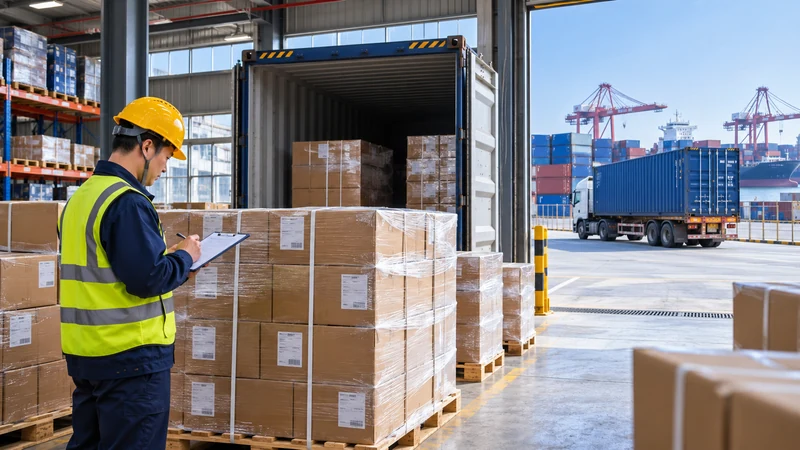
Shipping inventory from China to Amazon FBA in the USA requires more than booking international freight. Before your products leave the Chinese supplier, you need a confirmed Amazon shipment plan, an eligible U.S. importer of record, accurate customs documentation, compliant packaging and labeling, and a delivery arrangement that meets Amazon’s receiving requirements.
These responsibilities involve several parties, including your supplier, customs broker, freight forwarder, domestic carrier, and Amazon fulfillment center. A mistake at any handoff can lead to customs delays, additional handling costs, or inventory receiving problems.
Before shipping from China to Amazon FBA USA, confirm five essentials:
- Your Amazon FBA shipment plan and assigned receiving destinations are correct.
- Your importer of record and customs clearance arrangements are established.
- Commercial documents and product import requirements have been checked.
- Products, cartons, and pallets meet applicable Amazon requirements.
- Your carrier can deliver to the designated fulfillment center under the required conditions.
This guide explains how to verify each requirement and use a practical checklist before releasing your inventory from China.
1. Finalize Your Amazon FBA Shipment Plan Before Booking Freight
Your Amazon shipment plan determines where inventory must be delivered, how it should be identified, and which transportation arrangements are appropriate. Finalizing these details before booking freight helps prevent expensive changes after your supplier has packed the goods.
Verify Products, Quantities, and Shipment Information
Start with the Send to Amazon workflow in Seller Central.
Confirm that the products are eligible for FBA and that the correct SKUs, quantities, and packing configurations have been entered. Verify whether inventory is packed in single-SKU cartons, mixed-SKU cartons, or pallets.
Your shipment information should identify:
- Amazon shipment ID and applicable reference numbers
- Product SKUs and quantities
- Number of shipping cartons
- Box-content information
- Carton dimensions and gross weights
- Assigned fulfillment center destinations
- Selected shipment and carrier arrangements
Share the finalized information with your Chinese supplier and freight coordinator.
For example, if the supplier packs 40 cartons but the approved shipment plan reflects 36, the discrepancy should be resolved before labels are printed or the cargo is released.
Confirm Whether Amazon Has Assigned Multiple Receiving Locations
Amazon may direct inventory to one or several fulfillment locations, depending on the shipment and available inbound placement options.
This decision affects more than the final delivery address. Multiple destinations may require separate carton groups, labels, domestic transportation arrangements, and delivery appointments.
Amazon also applies inbound placement service fees under applicable shipment options. A plan with fewer destinations may simplify transportation but involve different Amazon fees.
Compare the available options using the actual shipment data before confirming your freight arrangement.
Do not assume that the closest Amazon fulfillment center to your chosen U.S. port will be your assigned destination.
Control Changes After Shipment Approval
Once the shipping plan is approved, treat it as a controlled document.
Any change involving quantities, carton configurations, shipping labels, or destinations should be reviewed before dispatch. Amazon may assess inbound defect fees for misrouted, deleted, abandoned, or materially incomplete shipments.
For multi-destination plans, do not independently cancel individual shipments or reroute cartons after approval. Follow Amazon’s current shipment modification procedures.
The practical rule is simple: your supplier’s packing records, freight instructions, and Amazon shipment plan must describe the same inventory.
2. Confirm the Importer of Record, DDP Terms, and Customs Responsibilities
A shipment entering the United States needs a lawful import arrangement. Amazon’s role as a fulfillment provider does not make it responsible for clearing your goods through customs.
Who Is the Importer of Record for Amazon FBA Shipments?
The Importer of Record (IOR) is the party legally responsible for import entry obligations, including compliance with applicable customs requirements and payment of duties and fees.
Amazon explicitly states that neither Amazon nor its fulfillment centers will act as the importer of record for FBA inventory.
Depending on the business structure and applicable U.S. customs rules, an eligible U.S. importing business or a qualified nonresident importer may act as the IOR.
Before shipping, confirm:
- The legal identity of the importer
- The importer identification number or registration arrangements
- Whether a customs bond is required
- Whether a licensed customs broker has been authorized
- Who will provide classification, valuation, and origin information
- Who will pay customs duties and applicable import charges
A customs broker can prepare and submit entry documentation, but using a broker does not eliminate the importer’s legal responsibilities.
See Amazon’s official imported-inventory requirements.
Understand Amazon’s DDP Shipping Requirement
Amazon requires imported FBA shipments to use Delivered Duty Paid (DDP) shipping terms. Its fulfillment centers will not accept shipments with outstanding freight, duty, tax, or other charges to be collected from Amazon.
However, arranging DDP transportation does not automatically establish a valid importer-of-record arrangement.
The seller, supplier, importer, and logistics provider must agree on who handles customs entry, who pays the relevant charges, and what the freight service includes.
A quotation described as “DDP shipping to Amazon” should clearly identify the responsible parties and included services. A single all-inclusive price is not sufficient evidence of customs compliance.
Amazon may also be identified as the ultimate consignee in certain circumstances, subject to its specific documentation instructions and advance customs broker coordination. This is different from naming Amazon as the importer of record.
Who Is Responsible for Each Shipment Stage?
| Shipment Activity | Typical Responsible Party |
|---|---|
| Product eligibility and FBA shipment creation | Amazon seller |
| Manufacturing, packing, and origin labeling | Chinese supplier or appointed preparation provider |
| U.S. import entry and duty obligations | Eligible importer of record |
| Customs filing and entry coordination | Authorized customs broker |
| International transportation | Appointed freight forwarder or carrier |
| U.S. inland transportation | Domestic carrier or logistics coordinator |
| Receiving and inventory processing | Amazon fulfillment center |
These are typical operational assignments. The final responsibilities depend on the actual contracts, importer arrangement, and applicable legal requirements.
Before dispatch: Obtain written confirmation of importer identity, customs brokerage arrangements, DDP service scope, and payment responsibilities.
3. Verify U.S. Customs Documents, Duties, and Product Import Requirements
Commercial inventory shipped from China must meet U.S. customs requirements regardless of whether the destination is an Amazon fulfillment center or an independent distribution warehouse.
Amazon shipment labels do not replace customs documentation.
Which Documents Are Needed?
Prepare the documents applicable to your shipment and have them reviewed before departure.
| Document | Purpose | Preparation or Review |
|---|---|---|
| Commercial Invoice | Identifies goods, parties, transaction values, and relevant commercial details | Supplier or seller; reviewed by importer and broker |
| Packing List | Records cartons, quantities, weights, and packing details | Supplier |
| Bill of Lading / Air Waybill | Records international transportation details | Carrier or freight forwarder |
| HTSUS and Origin Information | Supports tariff classification and duty determination | Importer and customs broker |
| Importer and Broker Documents | Supports lawful customs entry and representation | Importer and authorized broker |
| Product Compliance Documents | Supports applicable agency and product requirements | Seller, manufacturer, importer, or responsible compliance party |
Ensure product descriptions are specific enough for customs classification.
Descriptions such as “accessories,” “general merchandise,” or “electronic products” may be insufficient without identifying the actual goods.
The commercial invoice, packing list, and physical shipment should also agree on quantities and other material details.
Check HTS Classification and Applicable Import Duties
The United States uses the Harmonized Tariff Schedule of the United States (HTSUS) to classify imported goods.
Classification influences the applicable duty rate and may determine whether additional tariffs or special requirements apply.
For goods originating in China, the importer or broker should review:
- The correct HTSUS classification
- The legally determined country of origin
- The applicable normal customs duty
- Any relevant Section 301 or other additional tariffs
- Available exclusions or special provisions
- Applicable customs processing charges
Shipping from China does not automatically mean the product has Chinese customs origin. Origin must be determined according to the applicable rules.
Likewise, there is no single duty rate applicable to every product imported from China.
Importers should use the current U.S. Harmonized Tariff Schedule and relevant USTR Section 301 resources for product-specific review.
Another important consideration is low-value shipments. Effective August 29, 2025, the United States suspended the general duty-free de minimis treatment for covered imports valued at $800 or less. Small FBA replenishment shipments should therefore not be assumed to qualify for duty-free entry merely because of their declared value. Applicable exceptions and entry procedures must be checked.
Arrange Ocean Freight ISF Filing
For applicable ocean shipments, U.S. Customs and Border Protection requires an Importer Security Filing, commonly known as ISF or “10+2.”
Most core ISF information must be submitted at least 24 hours before the cargo is loaded onto the vessel destined for the United States, subject to the applicable filing rules.
The filing requires information from different shipment parties, including the importer, supplier, and shipping arrangements.
Ask your customs broker or authorized filing agent to confirm who is responsible for submitting the filing and what information they need.
ISF requirements for vessel cargo should not be confused with the advance reporting procedures applicable to air shipments.
See CBP’s Import Security Filing guidance.
Verify Product-Specific Import Compliance
Product approval within Amazon Seller Central does not automatically establish permission to import the goods into the United States.
Depending on the commodity, additional requirements may apply through agencies such as:
- FDA: Certain foods, cosmetics, medical devices, and other regulated products
- CPSC: Applicable consumer products subject to safety requirements
- FCC: Certain electronic or radiofrequency devices
- Other federal agencies: Products subject to additional import restrictions or controls
For example, importing a regulated electronic device may involve requirements beyond preparing a commercial invoice and applying FBA labels.
The importer should identify applicable regulatory obligations before the goods leave China.
4. Inspect Product Preparation, Carton Labels, and Pallets Before Shipping
Packaging errors are particularly expensive when discovered after inventory reaches the United States.
If a shipment must be relabeled, sorted, or repacked at a third-party warehouse, the seller may incur additional handling charges and lose valuable replenishment time.
Complete Product Preparation and Item Labeling in China
Amazon discontinued its U.S. FBA preparation and item-labeling services beginning January 1, 2026. Sellers must arrange the applicable preparation and labeling themselves or through suppliers and independent service providers.
Before packing, verify each SKU’s current requirements in Seller Central.
Check whether the product uses an eligible manufacturer barcode or requires an Amazon barcode, such as an FNSKU label.
Depending on the product, preparation may also involve protective packaging, secure closure, set identification, or additional handling requirements.
Items containing batteries, liquids, or other specially regulated materials may require separate compliance reviews.
Do not assume that all products can be prepared using the same packaging method.
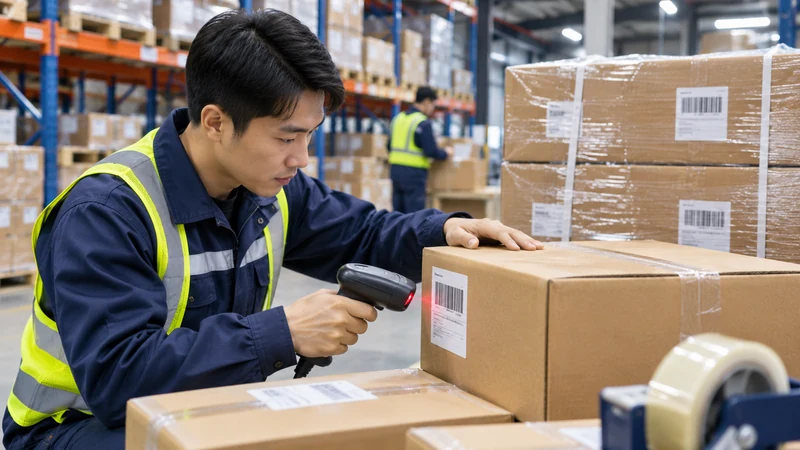
Verify Carton Labels and Box Contents
Every FBA shipping carton requires its own unique FBA Box ID label associated with the correct shipment.
The label must not be duplicated across cartons.
Before sealing the shipment, check that:
- Box contents match the submitted shipment information.
- Each carton has its correct unique FBA Box ID label.
- Required product-unit barcodes are present and scannable.
- Labels remain visible and readable.
- Old or irrelevant shipping barcodes have been removed or obscured.
- Carton dimensions and weights match the final packing records.
An FBA Box ID label is not the same as a product-unit barcode or a carrier shipping label.
Amazon also supports certain box-content information workflows using 2D barcodes, but these do not replace the unique FBA Box ID requirements.
See Amazon’s shipping and routing requirements.
Check Palletization and Container Loading
For palletized shipments, verify the applicable pallet specifications, load stability, carton placement, and labeling requirements.
Amazon generally requires FBA pallet identification labels on all four sides of a pallet. Cartons loaded onto pallets must still carry their individual box identification labels.
The packing team should confirm:
- Pallets are acceptable for the selected delivery arrangement.
- Cartons are stacked securely.
- Labels remain accessible for scanning.
- Stretch wrap and load protection are adequate.
- Pallet dimensions and weights meet the applicable requirements.
Direct ocean FCL delivery to Amazon fulfillment centers may be possible when the shipment meets Amazon’s applicable container preparation, safe unloading, and carrier requirements.
However, the receiving method must be verified before the supplier loads the container. Some shipments may require transloading, palletization, or additional preparation at a U.S. warehouse.
Origin inspection tip: Request photographs of finished cartons, barcode labels, pallet loads, and container loading where appropriate. Compare them against the approved shipment information before authorizing dispatch.
5. Choose a Freight and U.S. Delivery Model Based on Your FBA Shipment
The best transportation option depends on inventory volume, replenishment urgency, product characteristics, and the Amazon destinations assigned to the shipment.
Choosing freight solely by its international transportation rate can result in higher overall inbound costs.
Express, Air Freight, LCL, or FCL?
| Shipping Method | Best Considered When | Main Operational Consideration |
|---|---|---|
| Express / Parcel | Smaller urgent shipments eligible for parcel delivery | Parcel restrictions, customs arrangements, and FBA labeling |
| Air Freight | Time-sensitive commercial replenishment | Chargeable weight, airport handling, and domestic delivery |
| Ocean LCL | Moderate cargo volumes unsuitable for a full container | Consolidation, deconsolidation, and destination handling |
| Ocean FCL | Larger shipments or regular high-volume inventory | Container utilization, unloading requirements, and final-mile coordination |
For air freight, compare the cargo’s actual gross weight with its volumetric weight to understand chargeable-weight pricing.
For ocean LCL, consider destination CFS handling and cargo availability after deconsolidation.
For FCL, confirm whether the shipment can move directly to the assigned receiving facility or requires a separate U.S. handling operation.
For a broader review of international routes and methods, see China-to-USA shipping options.
Direct-to-FBA Delivery or an Intermediate U.S. Warehouse?
Two common delivery models are available.
Direct delivery: The shipment travels from China through international transportation and U.S. customs clearance to the assigned Amazon receiving location.
This may be suitable when the inventory is fully prepared, destinations are confirmed, and the selected carrier can meet the receiving requirements.
Intermediate warehouse delivery: The shipment clears U.S. customs and moves to a warehouse for storage, sorting, relabeling, palletization, or distribution before being delivered to Amazon.
An intermediate warehouse may be useful when multiple suppliers or Amazon receiving destinations create additional handling requirements.
However, it also introduces warehouse charges, extra transportation, and potential scheduling delays.
Compare Total Inbound Cost
Evaluate the complete cost of moving inventory into the Amazon receiving network.
Relevant components include:
- China pickup and origin handling
- International freight
- Customs brokerage, bond, duties, and applicable import fees
- U.S. terminal or consolidation-related charges
- Domestic trucking or parcel delivery
- Warehouse preparation and storage, if required
- Amazon inbound placement and applicable shipment-related fees
Amazon’s inbound placement service fee is separate from the freight forwarder’s transportation quotation. It depends on the actual shipment and selected placement option.
The U.S. inbound placement fee structure changed on January 15, 2026, so sellers should use current Seller Central estimates rather than historical fee schedules.
Decision rule: Compare the complete inbound expense and expected inventory availability, not just the quoted ocean or air freight cost.
6. Coordinate U.S. Customs Release, Carrier Appointments, and Amazon Receiving
The final delivery stage begins before the truck reaches an Amazon fulfillment center.
Customs release, cargo availability, carrier documentation, and receiving appointments must be coordinated in the correct sequence.
Confirm Cargo Release Before Domestic Dispatch
International arrival does not necessarily mean the goods are available for immediate collection.
For ocean freight, the shipment may still require customs release, terminal processing, carrier release, and—in the case of LCL—deconsolidation.
Air shipments can also require customs processing and cargo availability confirmation.
Before arranging domestic transport, confirm:
- Applicable customs and agency releases are complete.
- The cargo is available for pickup.
- Terminal or warehouse handling has been completed.
- Any outstanding charges or documentation issues have been addressed.
- The delivery instructions match the current Amazon shipment plan.
Failing to coordinate these steps can result in storage charges, missed truck appointments, or unnecessary waiting time.
Provide the Carrier with Correct Amazon Delivery Instructions
Amazon receiving procedures differ between small parcel deliveries and larger palletized or containerized shipments.
For applicable LTL, FTL, and FCL deliveries, the carrier may need to schedule an appointment through Amazon Carrier Central.
Depending on the delivery arrangement, the carrier may require:
- Amazon shipment IDs
- Amazon reference IDs
- Bill of lading
- Carrier tracking or PRO numbers
- Pallet and carton quantities
- Vehicle or container information
- Confirmed receiving location and appointment details
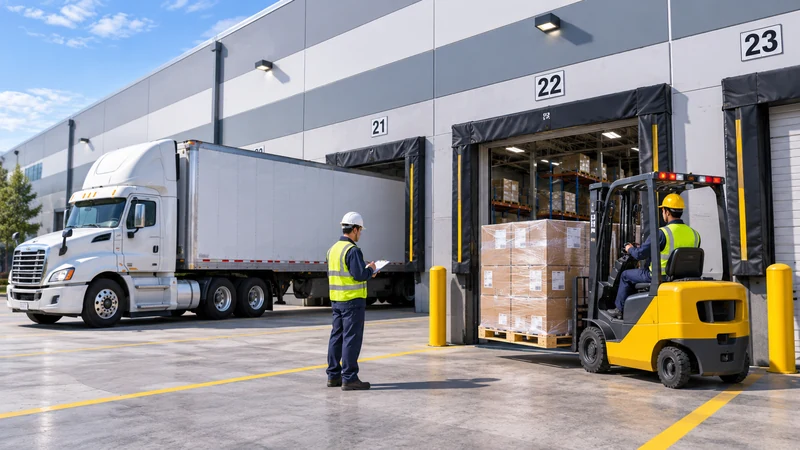
Before dispatch, verify that the carrier understands the assigned facility’s receiving and unloading conditions.
A truck reaching the correct address without the necessary appointment or delivery information may still experience delays.
Track Delivery and Inventory Receiving Separately
A carrier’s delivered status does not automatically mean that Amazon has processed every unit.
Inventory can pass through several stages:
- Collected by the domestic carrier
- Delivered or checked in at the fulfillment center
- Processed during Amazon receiving
- Reconciled against the shipment plan
- Made available for sale
Keep copies of the bill of lading, tracking information, proof of delivery, and relevant receiving records.
If Amazon reports missing quantities or discrepancies, these records can help identify where the shipment needs further investigation.
Avoid promising a fixed interval between carrier delivery and inventory availability.
7. Complete the China-to-USA Amazon FBA Shipping Checklist
Use the following checklist before releasing cargo, confirming international departure, and arranging final Amazon delivery.
Each checkpoint should have a responsible party and supporting evidence. An unresolved critical issue should be treated as a shipment hold rather than an item to address after arrival.
Gate 1: Before Releasing Cargo from the Chinese Supplier
| Verification Item | Responsible Party | Evidence Required |
|---|---|---|
| FBA shipment plan is confirmed | Seller | Approved shipment information |
| Assigned Amazon destinations are correct | Seller | Shipment IDs and destination list |
| Product eligibility and preparation checked | Seller / Supplier | Preparation requirements and inspection confirmation |
| Carton quantities and labels match | Supplier | Final packing list and label verification |
| Commercial documents are accurate | Supplier / Importer | Reviewed invoice and packing list |
| Importer and broker arrangements confirmed | Importer | Broker and importer confirmation |
Go / No-Go Decision: Do not release the goods if required labels, import arrangements, product approvals, or shipment destinations remain unresolved.
Gate 2: Before International Departure
| Verification Item | Responsible Party | Evidence Required |
|---|---|---|
| Freight booking matches cargo details | Freight coordinator | Booking confirmation |
| Applicable advance filing is arranged | ISF importer / Filing agent | Filing confirmation |
| Required customs documentation is ready | Importer / Broker | Document review |
| Freight service scope is agreed | Seller / Forwarder | Written quotation and service terms |
| Cargo is prepared for selected transport | Supplier / Forwarder | Packing and loading confirmation |
Go / No-Go Decision: Resolve customs documentation, filing, cargo acceptance, and booking discrepancies before the applicable departure deadline.
Gate 3: Before U.S. Final-Mile Delivery
| Verification Item | Responsible Party | Evidence Required |
|---|---|---|
| Customs and applicable agency release confirmed | Broker | Release confirmation |
| Cargo available for collection | Destination handling party | Availability notice |
| Final receiving destination verified | Seller / Freight coordinator | Current Amazon shipment plan |
| Carrier documentation complete | Domestic carrier | BOL and shipment references |
| Required delivery appointment arranged | Domestic carrier | Appointment confirmation |
| Delivery follow-up assigned | Seller / Logistics coordinator | Tracking and receiving follow-up plan |
Go / No-Go Decision: Do not dispatch final-mile transportation until the required release and delivery conditions have been confirmed.
What Information Is Needed for an Accurate FBA Freight Quote?
A freight forwarder needs more than the product name and destination country to assess transportation options.
Prepare the following information before requesting a shipment proposal:
- Origin: Chinese supplier address, pickup city, or consolidation warehouse
- Commodity: Detailed product description and any special handling requirements
- Cargo quantity: Number of cartons, pallets, and units
- Cargo measurements: Gross weight, carton dimensions, and total CBM
- Shipment readiness: Expected cargo-ready date
- Destination: Amazon fulfillment center codes and addresses, if already assigned
- Import arrangements: Importer-of-record status and customs broker information
- Required service: Ocean, air, pickup, consolidation, warehouse preparation, customs coordination, or final delivery
- Schedule: Target receiving window or inventory replenishment requirement
If Amazon has not assigned the final destination, state that clearly. A preliminary freight estimate may still be possible, but domestic delivery charges and the final service arrangement may need to be revised once the receiving locations are confirmed.
Conclusion: Confirm Every Handoff Before Shipping to Amazon FBA USA
Successful Amazon FBA shipping from China depends on coordinating the complete shipment—not just arranging international transportation.
Before dispatch, confirm the Amazon shipment plan, importer responsibilities, customs documents, product preparation, and final-mile receiving requirements. Use the three-stage checklist to identify outstanding issues while the goods are still at origin.
For commercial inventory moving from Chinese suppliers into Amazon’s U.S. fulfillment network, Winsail can discuss suitable freight methods, cargo consolidation, customs clearance coordination, and delivery arrangements based on your shipment requirements.
Request a Freight Quote
Share your cargo details, China pickup location, expected shipping date, and Amazon receiving destinations to discuss an appropriate transportation and delivery plan.
Official References
The following official resources support the U.S. import and Amazon FBA requirements discussed in this guide. Requirements should be checked again before each shipment.
- Amazon — Delivering Imports to Amazon
- Amazon — FBA Prep Service
- Amazon — Shipping and Routing Requirements
- Amazon — FBA Inbound Placement Service Fee
- Amazon — Seller Requirements for Freight Deliveries
- CBP — Import Security Filing
- CBP — Suspension of Duty-Free De Minimis Treatment
- USITC — Harmonized Tariff Schedule
- USTR — China Section 301 Tariff Actions
Regulatory and platform information reviewed: November 18, 2026. Actual customs treatment, tariffs, freight costs, and Amazon receiving requirements depend on the shipment and applicable rules at the time of import or delivery.
FAQ
Can My Chinese Supplier Ship Directly to an Amazon FBA Fulfillment Center?
Yes, direct delivery can be arranged when the supplier has completed the required preparation and the shipment has valid import, customs, and carrier arrangements. The inventory must be routed to Amazon's assigned receiving location using the correct shipment references. Some shipments may require intermediate warehousing or additional handling before final delivery.
Can Amazon Be the Importer of Record or Ultimate Consignee?
Amazon cannot act as the importer of record for FBA inventory. An eligible importer must be responsible for customs entry and applicable import obligations. Amazon may be identified as the ultimate consignee under specific documentation conditions, but this requires compliance with Amazon's instructions and appropriate advance coordination by the customs broker.
Is DDP Shipping Required for Amazon FBA Imports into the USA?
Amazon requires imported FBA shipments to use DDP shipping terms and does not accept outstanding freight, duties, or taxes charged to its fulfillment centers. However, a valid importer-of-record arrangement must still be established. Sellers should confirm who handles customs declarations, duty payments, and transportation charges before dispatch.
Do I Need a U.S. Warehouse When Amazon Assigns Multiple Receiving Locations?
Not necessarily. Multiple receiving destinations may be served through separately arranged domestic deliveries. An intermediate warehouse may be useful when inventory requires sorting, storage, palletization, relabeling, or distribution to several destinations. Compare the additional handling and transportation costs before selecting this arrangement.
Why Does My Carrier Show Delivered While My Amazon Inventory Is Not Available?
Carrier delivery and Amazon inventory receiving are different events. After physical delivery, Amazon may still need to check, receive, and reconcile the inventory before units become available for sale. Monitor the shipment status in Seller Central and retain carrier delivery records in case quantities or receiving information need investigation.